
-Blog-

The global shift towards dual-language streams has transformed contemporary classrooms, prompting researchers to evaluate the advantages and disadvantages of bilingual education. Modern applied linguistics examines how multiple tongues shape learning environments and cognitive outcomes.
Rather than relying on uniform setups, contemporary frameworks typically divide these initiatives into distinct structural designs: dual-language immersion programmes, where academic subjects are split evenly between two codes, and transitional models, which use a student’s home language as a temporary bridge to mainstream instruction.
These configurations demand careful syllabus alignment to prevent cognitive overload.
This article provides an evidence-based evaluation of the cognitive, linguistic, and operational parameters surrounding bilingual education, in order to help curriculum designers and educators make data-driven decisions.
Advantages of Bilingual Education
Dual-language instruction offers a wide array of measurable benefits that extend far beyond simple communication skills:
Better Cognitive Development
Bilingualism significantly enhances executive function, working memory, and selective attention. Research into cognitive flexibility demonstrates that managing two active linguistic systems trains the brain on how to switch tasks rapidly, suppress irrelevant stimuli, and process information with greater overall efficiency.
Deepened Cultural Knowledge and Social Skills
Being exposed to multiple languages expands socio-pragmatic competence and intercultural empathy. Learners naturally develop the ability to navigate diverse sociolinguistic environments, adjusting their communication styles to suit different cultural contexts and perspectives, something essential in a globalised world.
Better Academic and Language Skills
Navigating two linguistic systems boosts metalinguistic awareness—the ability to think about language as a system. This cross-linguistic transfer ensures that structural insights, reading strategies, and conceptual knowledge gained in one language reinforce and accelerate proficiency in the other.
Future Work Opportunities and Economic Edge
Proficiency in multiple codes provides clear career advantages. Individuals who can operate seamlessly across international markets and multinational organisations enjoy expanded job mobility and access to wider, global professional networks.
Potential for Cognitive Resilience at Older Ages
Lifelong bilingualism builds a robust cognitive reserve. Studies indicate that the continuous mental workout required to manage two languages can significantly delay the onset of age-related cognitive decline and neurodegenerative symptoms.
Disadvantages of Bilingual Education
Despite having clear advantages, dual-language programmes can also present distinct operational and pedagogical hurdles.
Financial Factors and Finding Great Teachers
Hiring highly qualified, bilingual educators who possess both native-level fluency and specialised content instruction training remains a major budgetary and logistical challenge for schools.
Initial Adjustment & Language Mixing
Educators frequently observe code-switching and temporary vocabulary variations during early stages. While it may seem alarming, this phase reflects healthy linguistic experimentation and developmental adaptation rather than structural confusion.
Risk of Losing the First Language
Without a carefully managed lexical syllabus that purposefully maintains and develops the native tongue, primary literacy skills could inadvertently decline as the second language becomes more dominant.
Societal Perceptions and Support
Programmes often face external biases or institutional resistance from communities that cling to traditional, monolingual educational models, requiring schools to actively justify their pedagogical choices.
Specific Learning Difficulties
Identifying reading or speech-processing difficulties, such as dyslexia, becomes much more complex in a multi-language setting, requiring specialised diagnostic tools to distinguish between language acquisition phases and true learning challenges.
FAQs
How does bilingual education impact a child’s cognitive development?
Dual-language learning alters neuroplasticity by constantly engaging the brain’s executive control network. Managing two active lexicons strengthens problem-solving capacities, enhances mental flexibility, and improves the ability to filter out distractions.
Is there a “best age” to start learning a second language?
While it has been proven that younger children benefit from high implicit acquisition capacities and native-like phonetic absorption, older learners bring advanced cognitive strategies and explicit learning strengths. Success depends more on sustained exposure and instructional quality than a rigid chronological cutoff.
Do bilingual children have a smaller vocabulary than children who only speak one language?
While a bilingual child’s vocabulary in any single language may appear smaller than a monolingual peer’s, their total conceptual vocabulary across both languages is typically equal or greater. Educators can measure this objectively by tracking tokens versus types or running a lexical diversity audit using a type-token ratio (TTR).
If a child has a learning difficulty, can he still be bilingual?
Children with learning differences can successfully achieve bilingualism. Evidence shows that multilingual environments do not cause or worsen learning disabilities, provided students receive appropriate, scaffolding-heavy instruction tailored to their specific needs.
Conclusion
Weighing the pros and cons of a dual-language education reveals that while the structural and operational challenges of bilingual programmes are real, the cognitive, linguistic, and cultural returns are unparalleled.
For educators seeking to maintain rigorous standards, Text Inspector offers an invaluable solution. Teachers can leverage tools like the English Vocabulary Profile (EVP) and the Lexical Profile Scorecard to monitor vocabulary growth across both languages, ensuring instructional materials remain perfectly level-appropriate.
To effectively manage these linguistic shifts, educators can use professional tools to analyse the lexical complexity of their teaching materials. Start optimising your bilingual curriculum with Text Inspector today!
References
- Archila-Suerte P, Zevin J, Bunta F, Hernandez AE. Age of acquisition and proficiency in a second language independently influence the perception of non-native speech. Biling (Camb Engl). 2012 Jan;15(1):190-201. doi: 10.1017/S1366728911000125. Epub 2011 Sep 7. PMID: 30197550; PMCID: PMC6124681.
- Bialystok E, Abutalebi J, Bak TH, Burke DM, Kroll JF. Aging in two languages: Implications for public health. Ageing Res Rev. 2016 May; 27:56-60.
doi: 10.1016/j.arr.2016.03.003. Epub 2016 Mar 16. PMID: 26993154; PMCID: PMC4837064. - Young, A. (2025, March 14). Debunking Myths About Bilingualism in Children with Learning Difficulties. Learning Lab. Available on:
Share
Related Posts

Three Innovative uses of Artificial Intelligence for Languages: Understanding, Preserving and Learning
13 February, 2023
Artificial Intelligence (AI) and languages have been deeply interconnected since the former’s inception. AI’s objective […]
Read More ->
Conquer CEFR Levels: The Ultimate Explanation of Language Proficiency
23 June, 2022
If you’ve learned an European language, you’re almost certain to have seen the CEFR Levels […]
Read More ->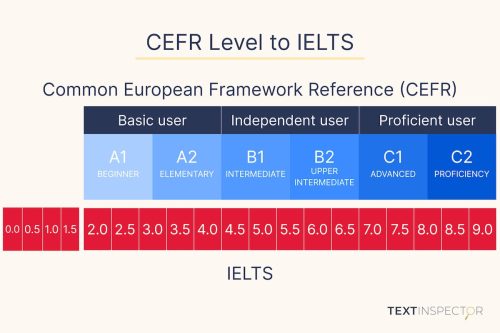
How to convert your CEFR Level to IELTS
20 February, 2024
The CEFR is one of the most commonly used measures of students’ foreign language abilities. However, there are several other tests and measures for English as a Second Language, including the IELTS. In this article, we will discuss how to convert your IELTS scores into CEFR levels, what each level means and how this can be useful for your exam preparation.
Read More ->